3 hr 30 min
Coorong Discovery Cruise from Goolwa
Explore the stunning Coorong wetlands with wildlife encounters, cultural walks, and meals aboard
Reserve
Hand-picked by our editors — the best 3 river experiences from 12 operators reviewed.
Verified partners for every tour, free cancellation where available, and instant confirmation on every booking.
3 hr 30 min
Explore the stunning Coorong wetlands with wildlife encounters, cultural walks, and meals aboard
Reserve
6 hr
Navigate the Murray River's final stretch, discover Aboriginal heritage, and explore remote wetlands
Reserve
3 hr
Paddle to Murray Mouth at dusk, explore sand dunes, and savor local produce with waterfront views
ReservePrices from verified partners. Availability updates in real time at checkout. Free cancellation policies apply where shown.
The landmarks, rooms, and views travelers on this tour remember — all visible on a single visit.
This massive estuarine system supports thousands of migratory birds annually
Goolwa Barrage
Younghusband Peninsula
Pelican Point
Salt Creek
They complement each other, but most visitors who do both find the Kangaroo Island day trip the more intense adventure compared to the tranquil coorong day cruises tours.
| Feature | Top pick Coorong Day Cruises | Kangaroo Island Day Trip |
|---|---|---|
Environment |
Calm wetlands and lagoons | |
Coastal island rugged terrain;Primary Activity |
Birdwatching and boat navigation | |
Land-based wildlife and scenery;Wildlife Focus |
Pelicans and migratory birds | |
Kangaroos and koalas;Travel Intensity |
Low impact exploration | |
High travel requirement;Typical Duration |
4–6 hours | |
| See tickets → |
Verdict: Choose the coorong day cruises tour if you prefer peaceful waterway exploration, or opt for the Kangaroo Island experience to see diverse terrestrial fauna, though travelers should note that while Coorong day cruises tickets are available, island visits require extensive travel.
Choose your ticket, select your date, and reserve in under two minutes. Secure checkout handled by our verified partner.
Instant confirmation by email, with a mobile voucher you can save offline. No printing, no queuing at a collection desk.
Arrive at the entrance, show your voucher on your phone, and walk in. Most tickets include priority or skip-the-line access.
Practical details for your visit straight from our verified partners — hours, access, rules, and how to get there.
Princes Highway, Goolwa, SA
Primary hub for many Coorong day cruises
Drive along the Princes Highway to access various park entry points.
Available from nearby towns like Goolwa, though advanced booking is essential.
Wear layered clothing and non-slip footwear suitable for wet boat decks and sandy walking trails. A windproof jacket is recommended for coorong day cruises tours.
Keep personal items secure in a waterproof bag during your transit on coorong day cruises. Large luggage is generally prohibited on smaller tour vessels.
Photography is encouraged, but ensure your equipment is protected from salt spray and water. Drone usage within Coorong National Park requires a specific permit.
Vessel accessibility varies; please confirm boarding requirements with your operator before booking coorong day cruises. Some shoreline areas are sandy and may be difficult for wheelchairs.
Mobile reception can be inconsistent in remote parts of the Coorong. Keep your phone in a protective case and ensure it is fully charged before departure.
Families are welcome, though life jackets must be worn by children at all times while aboard. Coorong day cruises provide a great educational environment for children to learn about local wetlands.
Carry sufficient water and snacks, as facilities are limited within the remote sections of Coorong National Park. Some Coorong day cruises may include catering, so verify your booking details.
Pets are generally prohibited in Coorong National Park to protect sensitive bird habitats. Always check current park management guidelines before traveling with animals.
Always stay on marked trails to protect the fragile ecosystem. Refer to the official site at https://www.parks.sa.gov.au/parks/coorong-national-park for current park alerts.
Best time to go, insider tips, nearby landmarks, and the cancellation fine print — flip through to skim what matters to you.
How crowds, weather, and events shift across the year.
Mild temperatures and peak migratory bird activity make this an ideal time for Coorong day cruises tours.
Warm weather is excellent for water-based activities, though visitors should aim for the 08:00–17:00 window to avoid heat.
Cooler, stable weather provides clear visibility for photography on Coorong day cruises.
Cooler temperatures are comfortable for long walks, with fewer crowds present in the park.
Small details that turn a good visit into a great one.
The reflection of the sun off the water significantly increases UV exposure. Wear high-factor sunscreen and a wide-brimmed hat.
Arrive between 08:00–17:00 for the best light and to catch the most active periods for bird species.
Bring quality binoculars to observe distant wildlife without disturbing their natural behavior.
Marine conditions change rapidly; always verify your Coorong day cruises tour status before departing.
Carry more water than you think you need, especially during summer visits to the Coorong.
Non-bookable sights within a short walk — free to visit, easy to pair.
A narrow strip of sand dunes separating the Coorong from the Southern Ocean.
A vast, shallow estuarine ecosystem vital for native bird species.
Provides elevated views over the surrounding wetlands and dunes.
Flexible, no hidden fees.
Operators typically require 48 hours notice for a full refund of coorong day cruises tickets. Cancellations due to extreme weather are usually fully refundable.
Hand-picked options within walking distance — pick a district for vibe, or a specific hotel for convenience.
Comfortable lodging near the shores of Lake Albert.
Located near the marina, ideal for morning Coorong day cruises tickets.
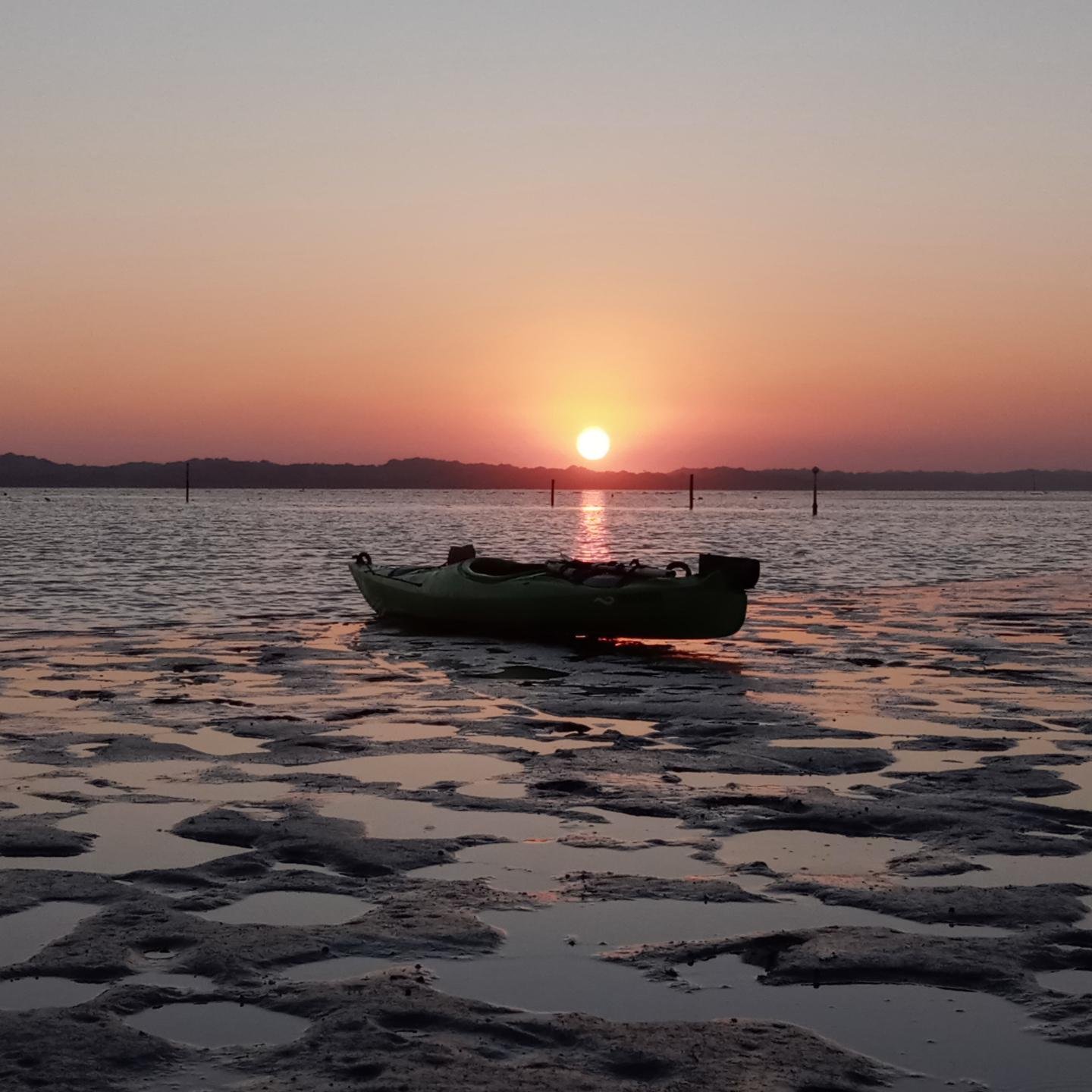
The Coorong extends 110 kilometres along South Australia's southern coast, a saline lagoon system separated from the Southern Ocean by the Younghusband Peninsula's sand dunes. Its hypersaline waters, fed intermittently by the Murray River, support one of Australia's most significant waterbird habitats — more than 240 species pass through during migration seasons, with pelican colonies numbering in the thousands during breeding cycles. The lagoon's salinity varies dramatically by section, creating distinct ecological zones that Aboriginal Ngarrindjeri people have navigated for over 10,000 years using reed rafts and seasonal knowledge of fish runs. Coorong day cruises depart from Goolwa, the historic river port where the Murray meets Lake Alexandrina, 85 kilometres southeast of Adelaide. Vessels range from covered pontoon boats accommodating 40 passengers to smaller rigid inflatables that access shallow channels inaccessible to larger craft. Discovery itineraries focus on the northern lagoon near the Murray Mouth barrages, where engineered flows maintain navigable depth and freshwater mixing zones critical for threatened species like the Murray hardyhead and Yarra pygmy perch. Guides interpret the tension between agricultural water extraction upstream and the ecosystem's salinity balance — a contested management issue since the 1930s when barrage construction began. The landscape reads as horizontal minimalism: saltbush plains, skeletal Melaleuca stands, and mirror-flat water interrupted only by feeding birds. Pelicans form the visual anchor — congregations of 500 or more create distant white clusters against grey-green vegetation. Cormorants dry their wings on dead timber snags. Black swans paddle through reed beds that once provided fibre for Ngarrindjeri basket weaving, a craft tradition now practiced by fewer than a dozen master weavers. Cultural tour variants include stops at middens — shell deposits marking millennia of seasonal camps — and demonstrations of traditional fishing techniques using woven nets. Sunset kayak departures from designated launch points near Salt Creek offer quieter access to shallow coves where stingrays glide over sand flats at dusk. Paddlers navigate by the calls of red-necked avocets and the percussive splash of diving terns. The water temperature remains cold year-round, averaging 14–18°C, a thermal legacy of Southern Ocean currents that sweep northeast through Backstairs Passage. Evening light renders the dune line a burnt orange ribbon against indigo sky — a colour gradient that persists for approximately 40 minutes after official sunset, depending on cloud cover and atmospheric dust load from inland salt lakes.
"Pelican congregations of 500 or more create distant white clusters against grey-green vegetation."
A step-by-step walkthrough of the visit — what you'll see, how long each stage takes, and the details that matter.
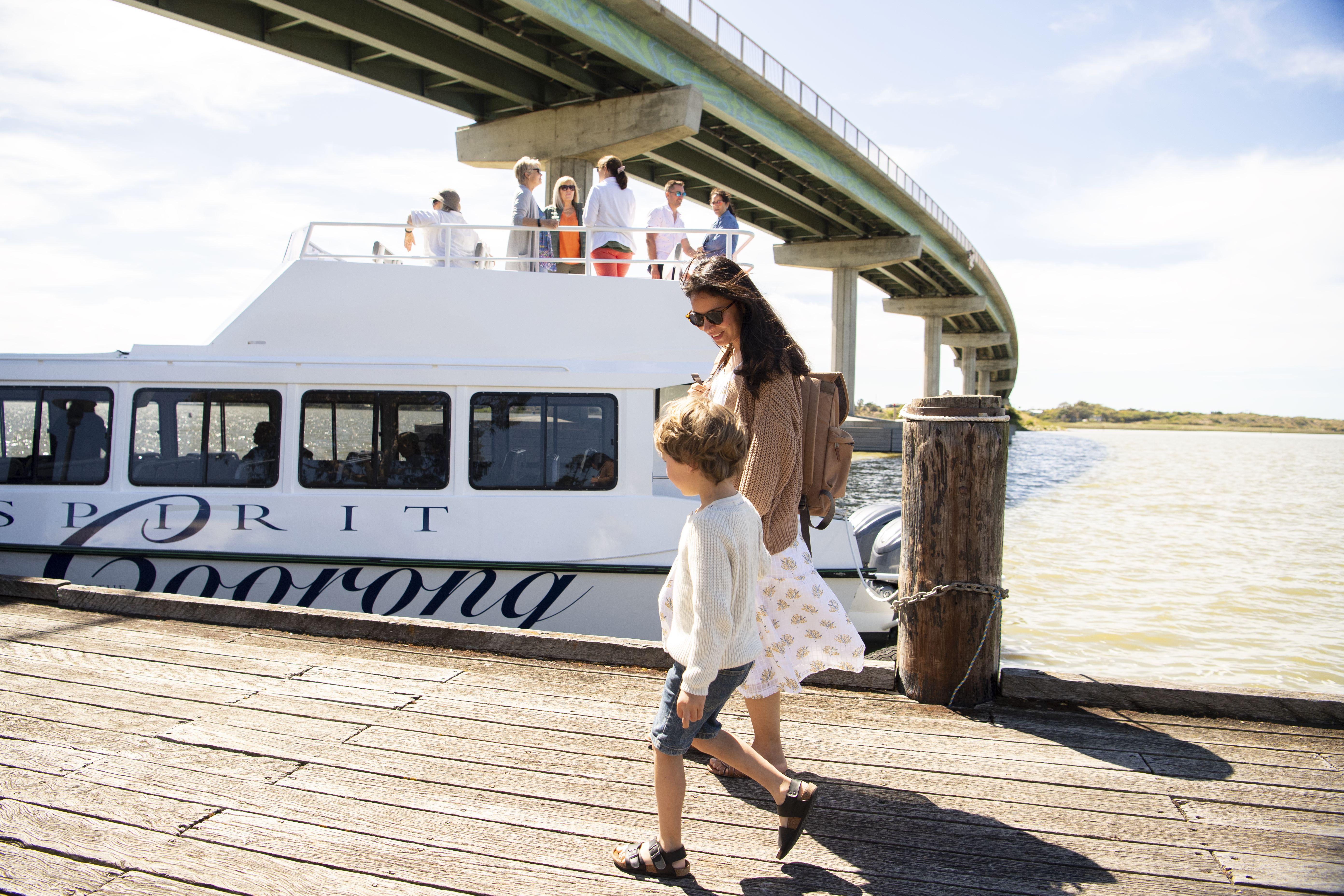
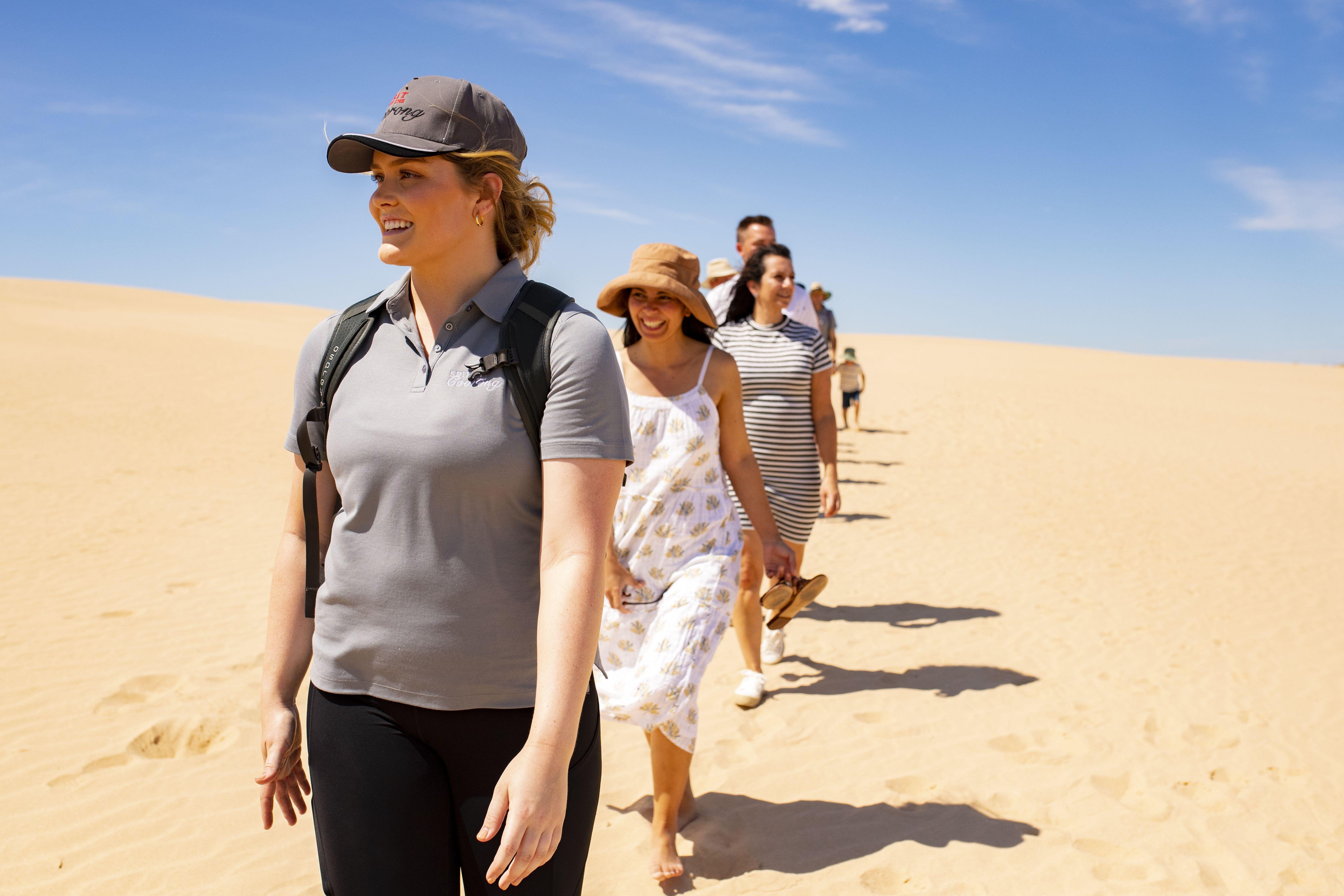
You board at Goolwa Wharf, where the Spirit of the Coorong pontoon idles beside weathered pylons. The crew secures mooring lines and you claim a starboard bench as the vessel clears the marina breakwater, entering the river channel that feeds Lake Alexandrina. Within 15 minutes the banks widen, revealing the first barrages — concrete sluice structures controlling freshwater flow into the lagoon system. The boat reduces speed as pelicans lift from sandbanks 30 metres ahead, their wingspans creating slow, synchronised arcs. Your guide gestures toward a dune line to the southeast, explaining that the Younghusband Peninsula runs unbroken for 194 kilometres, one of the longest barrier island systems in the Southern Hemisphere. You pass reed beds where black swans nest in spring, their cygnets now fully fledged and foraging independently. A cultural tour extension anchors near a shell midden, where Ngarrindjeri guides demonstrate traditional net weaving using Phragmites reeds harvested that morning. The shells underfoot — cockles and pipis — represent dietary staples consumed across centuries, their calcium slowly weathering into the sandy substrate. You handle a woven fish trap replica, its conical geometry designed to funnel mullet during tidal pulses that once occurred before barrage installation altered flow patterns. On the return leg, the vessel turns northwest toward the Murray Mouth, where freshwater meets ocean surf in a turbulent convergence zone marked by standing waves and sediment plumes visible from 500 metres offshore.
Coorong National Park is open Monday through Sunday, 00:00–23:59.
Yes, families are welcome, though children should be supervised and life jackets worn during all Coorong day cruises.
Entry to Coorong National Park is 0 AUD for day visitors.
While you can bring snacks, many Coorong day cruises include refreshments, so check your tour details.
The best arrival window for light and comfort is 08:00–17:00.
Yes, advance booking is recommended for all Coorong day cruises tickets to ensure availability.
Photography is excellent in the park, especially within the 08:00–17:00 window.
Operators usually offer a refund or rebooking if Coorong day cruises tours are cancelled due to weather.
Most cruises depart from Goolwa, accessible via the Princes Highway.